Stop Dog Harness Rubbing Armpits: A Fitting Fix Guide
Posted by Pear Digital posted on November 06, 2026
Last Updated: November 6, 2026
Quick Summary
To stop harness rubbing, set the girth strap first so it sits behind the ribcage with room for two fingers, then adjust the chest strap so it clears the armpit by a finger's width. Test the fit in motion and shorten the chest strap a notch at a time if the harness slips forward.
A girth strap pulled tighter than two fingers is the most common cause of rubbing behind the front legs.
Rubbing behind the front legs usually means the chest strap sits too low or too far forward.
Watch your dog walk, trot and turn for two to three minutes to judge the fit.
Stop using the harness if you see redness or broken skin, and speak to your vet if skin is broken or weeping.
Look for a Y-shape frame, soft padding and multiple adjustment points in a chafe-friendly harness.
Most harness rubbing starts with the same three problems: a strap sitting too far forward, a girth strap pulled too tight, or a chest plate that never had enough clearance in the first place. Broad-chested, short-necked breeds are particularly prone to this. The harness is not "bad" so much as badly placed.
Armpit chafing happens when the harness moves against the skin on every stride. Fixing the position and tension resolves most rubbing.
Fit Problems That Cause Friction
The armpit sits right behind the front legs. It is thin-skinned, warm, and moves constantly. Any strap that crosses it will rub.
Common fit faults we see:
The girth strap sits too far forward, landing in the armpit crease instead of behind the ribcage
The chest strap is too short, so the harness pulls tight across the shoulder
The harness is a size too small for a deep-chested dog
Design and Material Factors
Stiff webbing and thin padding cause more friction than soft, breathable material. A harness with a non-restrictive Y-shape frame can help keep straps off the armpit, whereas a straight-across chest strap may not.
Watch out: a harness that gapes at the chest will slide forward on every walk. That sliding is what wears the skin raw.
How to Fit a Dog Harness: A Step-by-Step Checklist
Learning how to fit a dog harness properly takes a few minutes, but the fit you check standing still is only the starting point. Most armpit rubbing appears once the dog is moving, so the sequence below is designed to be repeated: set the harness standing, test it in motion, then adjust and retest.
How to Fit a Dog Harness Correctly - Important Tips
K9 Active Health
Step 1: Measure and Size
Measure the widest part of the ribcage, just behind the front legs. Add two fingers of room. Then check the chest depth from the breastbone to the girth line.
Measure girth at the deepest point of the ribcage
Measure chest width across the breastbone
Weigh your dog and check the size chart
If the girth measurement sits between two sizes, many owners find it helpful to choose the larger size and use the adjustment points to take up the slack rather than buying a harness that pinches.
Step 2: Set the Girth Strap First
Work one strap at a time, starting at the girth. Tighten until you can fit two fingers underneath, then stop. A girth strap pulled tighter than this is the single most common cause of rubbing behind the front legs, because it pulls the whole harness forward into the armpit crease on every stride.
Step 3: Set the Chest Strap Second
Set the chest strap so the front plate sits on the breastbone, not the throat. The strap should clear the armpit by a finger's width when the dog stands square. If the chest strap is too short, the harness pulls tight across the shoulder; if it is too long, the front assembly slides forward into the armpit.
Step 4: Run the Standing Checks
Girth strap sits behind the ribcage, not in the armpit
Two fingers slide under every strap
Chest plate rests flat, with no bunching
Step 5: Test the Fit in Motion
A standing fit check is only half the job. Put the dog on a lead and watch it walk, trot, and turn for two to three minutes.
Does the harness rotate to one side?
Does the chest plate slide toward the throat?
Does any strap bunch into the armpit on a turn?
Watch out: a harness that looks perfect standing still can migrate a full strap-width forward within a few strides, so judge the fit after movement, not before it.
Step 6: Adjust and Retest
If the harness slips forward, shorten the chest strap a notch at a time and retest. If it rotates, check that both sides of the girth strap are set to the same length. Repeat the motion test after every adjustment until the harness stays put through a walk, a trot, and a shake-off.
Our harness guide walks through sizing for broad-chested breeds if you want a second reference.
Dog Harness Rubbing Behind Front Legs: Fixing Strap Position
Rubbing behind the front legs almost always means the chest strap is sitting too low or too far forward.
Woman checking the fit of a padded harness strap behind a dog's leg
Loosen the chest strap first. Slide the front assembly back until the strap clears the armpit by a finger's width.
If the harness still slips forward, the chest strap is too long. Shorten it a notch at a time.
A standing fit check is only half the job. Watch your dog walk, trot, and turn.
Does the harness rotate to one side?
Does the chest plate slide toward the throat?
Does any strap bunch into the armpit on a turn?
If any answer is yes, readjust before the next walk. The signs a harness doesn't fit article covers the subtler warning signs.
Dog Harness Chafing Treatment and Safe Healing
Stop using the harness if you see redness or broken skin. Continued rubbing can turn a minor irritation into an open wound. The harder question is whether what you are looking at is harness chafing at all, because the right response depends on the answer.
Telling Harness Chafing from Other Skin Problems
Harness chafing has a recognisable pattern. It appears where a strap crosses thin skin, most often the armpit crease, the chest just behind the front legs, or the point of the shoulder.
A common pattern is that chafing is confused with one of the following:
Contact dermatitis or an allergy to a lining or dye, which tends to spread beyond the strap line and may be itchy
A fungal infection, which often spreads in a ring and worsens despite removing the harness
Watch out: if the skin is broken, weeping, swollen, smells, or the redness spreads beyond the strap line, speak to your vet before applying anything. Fit changes will not resolve an infection.
Cleaning and Protecting the Skin
For simple redness without broken skin, clean the area gently and keep it dry. Check with your vet before applying anything to the skin.
Human creams and oils can irritate dog skin, and some ingredients are toxic if licked. Ask your vet about a suitable topical ointment.
A Safe Return-to-Harness Plan
Return to the harness in stages rather than all at once:
Wait until the skin is fully healed, no redness, no scabs, no tenderness when you touch it gently.
Refit from scratch using the step-by-step checklist above, starting with the girth strap.
Walk for five to ten minutes only, then remove the harness and check the skin.
If the skin is clean, extend to a normal walk the next day and check again.
If redness returns in the same spot, the fit is still wrong, do not simply wait for it to heal and repeat.
For general skin and coat care guidance, the PDSA pet health advice is a useful starting point.
Best Harness for Dogs That Chafe: What to Look For
The best harness for dogs that chafe has soft padding, a Y-shape frame, and multiple adjustment points. Everything else is secondary.
Our checklist when we assess a harness:
Feature
Why It Matters
What to Avoid
Y-shape front frame
Keeps straps off the armpit
Straight-across chest strap
Soft padded chest plate
Spreads pressure
Thin, stiff webbing
Breathable lining
Reduces heat and sweat
Non-breathable fabric
Multiple adjustment points
Fits non-standard shapes
Single-point adjustment
Rounded strap edges
Less friction on skin
Sharp or folded edges
Grab handle
Control without pulling
No handle on strong dogs
You can browse the full harness collection to compare padded, ergonomic options against this list.
Choosing the Right BULLYION Harness for Your Dog
BULLYION harnesses use Softcell padding, a non-restrictive Y-shape frame, and breathable, allergy-friendly materials, designed to support comfort and help prevent rubbing.
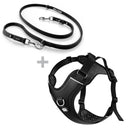
The HYGGE Comfort Padded Harness at £49.99 features Softcell padding, a reinforced grab handle, and a pull-tested LockForce buckle.
BULLYION® HYGGE Comfort Padded Heavy Duty Dog Harness With Handle – Staffy & Bully Breeds
If the fit still is not right, our returns policy gives you 14 days from delivery to send it back.
Frequently Asked Questions
Why does my dog's harness rub under their front legs?
Rubbing under the front legs usually comes from a harness that sits too far forward or has straps that are too loose or too tight. When the chest strap crosses the armpit rather than sitting behind the shoulder, every step creates friction. A harness with multiple adjustment points and padded, breathable material reduces this. Check that the girth strap allows a two-finger fit and that the chest strap clears the elbow, then watch your dog move to confirm the straps stay in place.
How tight should a dog harness be around the chest and shoulders?
You should be able to slide two fingers under each strap without force. Any tighter and the harness restricts movement and presses on the skin; any looser and it slips and rotates, which causes rubbing. Adjust the girth strap first, then the chest strap, and recheck both after a short walk. A well-fitted harness stays centred on the chest and does not shift when your dog turns or pulls.
Can I put anything on my dog's skin to prevent harness chafing?
Keep the area clean and dry, and speak to your vet before applying any topical product to sore skin. While the skin heals, remove the harness for walks and use a lead attached to a collar for short toilet breaks. Once healed, switch to a harness with Softcell padding and breathable lining, such as the BULLYION Hygge, and reintroduce it gradually with short sessions.
Should I stop using a harness if it is rubbing my dog?
Yes, stop using it for anything beyond short toilet breaks until the skin heals. Continued rubbing on sore skin causes deeper irritation and possible infection. If the skin is broken, weeping or very red, see your vet. Once healed, refit the harness using a step-by-step checklist, test it in motion, and if rubbing persists despite a correct fit, try a different design with more adjustment points and softer padding.
Rubbing is a fit problem, not a fact of life. If your dog has been sore under a harness, the fix usually takes ten minutes and a proper adjustment. Explore our latest gear designed for everyday comfort and lifelong adventure, and get started with BULLYION to keep your dog comfortable on every walk.

Stop Dog Harness Rubbing Armpits: A Fitting Fix Guide
Last Updated: November 6, 2026
Quick Summary
To stop harness rubbing, set the girth strap first so it sits behind the ribcage with room for two fingers, then adjust the chest strap so it clears the armpit by a finger's width. Test the fit in motion and shorten the chest strap a notch at a time if the harness slips forward.
Table of Contents
Why Your Dog's Harness Rubs the Armpits
Most harness rubbing starts with the same three problems: a strap sitting too far forward, a girth strap pulled too tight, or a chest plate that never had enough clearance in the first place. Broad-chested, short-necked breeds are particularly prone to this. The harness is not "bad" so much as badly placed.
Armpit chafing happens when the harness moves against the skin on every stride. Fixing the position and tension resolves most rubbing.
Fit Problems That Cause Friction
The armpit sits right behind the front legs. It is thin-skinned, warm, and moves constantly. Any strap that crosses it will rub.
Common fit faults we see:
Design and Material Factors
Stiff webbing and thin padding cause more friction than soft, breathable material. A harness with a non-restrictive Y-shape frame can help keep straps off the armpit, whereas a straight-across chest strap may not.
Watch out: a harness that gapes at the chest will slide forward on every walk. That sliding is what wears the skin raw.
How to Fit a Dog Harness: A Step-by-Step Checklist
Learning how to fit a dog harness properly takes a few minutes, but the fit you check standing still is only the starting point. Most armpit rubbing appears once the dog is moving, so the sequence below is designed to be repeated: set the harness standing, test it in motion, then adjust and retest.
How to Fit a Dog Harness Correctly - Important Tips
K9 Active Health
Step 1: Measure and Size
Measure the widest part of the ribcage, just behind the front legs. Add two fingers of room. Then check the chest depth from the breastbone to the girth line.
If the girth measurement sits between two sizes, many owners find it helpful to choose the larger size and use the adjustment points to take up the slack rather than buying a harness that pinches.
Step 2: Set the Girth Strap First
Work one strap at a time, starting at the girth. Tighten until you can fit two fingers underneath, then stop. A girth strap pulled tighter than this is the single most common cause of rubbing behind the front legs, because it pulls the whole harness forward into the armpit crease on every stride.
Step 3: Set the Chest Strap Second
Set the chest strap so the front plate sits on the breastbone, not the throat. The strap should clear the armpit by a finger's width when the dog stands square. If the chest strap is too short, the harness pulls tight across the shoulder; if it is too long, the front assembly slides forward into the armpit.
Step 4: Run the Standing Checks
Step 5: Test the Fit in Motion
A standing fit check is only half the job. Put the dog on a lead and watch it walk, trot, and turn for two to three minutes.
Watch out: a harness that looks perfect standing still can migrate a full strap-width forward within a few strides, so judge the fit after movement, not before it.
Step 6: Adjust and Retest
If the harness slips forward, shorten the chest strap a notch at a time and retest. If it rotates, check that both sides of the girth strap are set to the same length. Repeat the motion test after every adjustment until the harness stays put through a walk, a trot, and a shake-off.
Our harness guide walks through sizing for broad-chested breeds if you want a second reference.
Dog Harness Rubbing Behind Front Legs: Fixing Strap Position
Rubbing behind the front legs almost always means the chest strap is sitting too low or too far forward.
Loosen the chest strap first. Slide the front assembly back until the strap clears the armpit by a finger's width.
If the harness still slips forward, the chest strap is too long. Shorten it a notch at a time.
BULLYION® HYGGE Comfort Padded Heavy Duty Dog Harness With Handle – Staffy →
Assessing Fit in Motion
A standing fit check is only half the job. Watch your dog walk, trot, and turn.
If any answer is yes, readjust before the next walk. The signs a harness doesn't fit article covers the subtler warning signs.
Dog Harness Chafing Treatment and Safe Healing
Stop using the harness if you see redness or broken skin. Continued rubbing can turn a minor irritation into an open wound. The harder question is whether what you are looking at is harness chafing at all, because the right response depends on the answer.
Telling Harness Chafing from Other Skin Problems
Harness chafing has a recognisable pattern. It appears where a strap crosses thin skin, most often the armpit crease, the chest just behind the front legs, or the point of the shoulder.
A common pattern is that chafing is confused with one of the following:
Watch out: if the skin is broken, weeping, swollen, smells, or the redness spreads beyond the strap line, speak to your vet before applying anything. Fit changes will not resolve an infection.
Cleaning and Protecting the Skin
For simple redness without broken skin, clean the area gently and keep it dry. Check with your vet before applying anything to the skin.
Human creams and oils can irritate dog skin, and some ingredients are toxic if licked. Ask your vet about a suitable topical ointment.
A Safe Return-to-Harness Plan
Return to the harness in stages rather than all at once:
For general skin and coat care guidance, the PDSA pet health advice is a useful starting point.
Best Harness for Dogs That Chafe: What to Look For
The best harness for dogs that chafe has soft padding, a Y-shape frame, and multiple adjustment points. Everything else is secondary.
Our checklist when we assess a harness:
Feature
Why It Matters
What to Avoid
Y-shape front frame
Keeps straps off the armpit
Straight-across chest strap
Soft padded chest plate
Spreads pressure
Thin, stiff webbing
Breathable lining
Reduces heat and sweat
Non-breathable fabric
Multiple adjustment points
Fits non-standard shapes
Single-point adjustment
Rounded strap edges
Less friction on skin
Sharp or folded edges
Grab handle
Control without pulling
No handle on strong dogs
You can browse the full harness collection to compare padded, ergonomic options against this list.
Choosing the Right BULLYION Harness for Your Dog
BULLYION harnesses use Softcell padding, a non-restrictive Y-shape frame, and breathable, allergy-friendly materials, designed to support comfort and help prevent rubbing.
The HYGGE Comfort Padded Harness at £49.99 features Softcell padding, a reinforced grab handle, and a pull-tested LockForce buckle.
If the fit still is not right, our returns policy gives you 14 days from delivery to send it back.
Frequently Asked Questions
Why does my dog's harness rub under their front legs?
Rubbing under the front legs usually comes from a harness that sits too far forward or has straps that are too loose or too tight. When the chest strap crosses the armpit rather than sitting behind the shoulder, every step creates friction. A harness with multiple adjustment points and padded, breathable material reduces this. Check that the girth strap allows a two-finger fit and that the chest strap clears the elbow, then watch your dog move to confirm the straps stay in place.
How tight should a dog harness be around the chest and shoulders?
You should be able to slide two fingers under each strap without force. Any tighter and the harness restricts movement and presses on the skin; any looser and it slips and rotates, which causes rubbing. Adjust the girth strap first, then the chest strap, and recheck both after a short walk. A well-fitted harness stays centred on the chest and does not shift when your dog turns or pulls.
Can I put anything on my dog's skin to prevent harness chafing?
Keep the area clean and dry, and speak to your vet before applying any topical product to sore skin. While the skin heals, remove the harness for walks and use a lead attached to a collar for short toilet breaks. Once healed, switch to a harness with Softcell padding and breathable lining, such as the BULLYION Hygge, and reintroduce it gradually with short sessions.
Should I stop using a harness if it is rubbing my dog?
Yes, stop using it for anything beyond short toilet breaks until the skin heals. Continued rubbing on sore skin causes deeper irritation and possible infection. If the skin is broken, weeping or very red, see your vet. Once healed, refit the harness using a step-by-step checklist, test it in motion, and if rubbing persists despite a correct fit, try a different design with more adjustment points and softer padding.
Rubbing is a fit problem, not a fact of life. If your dog has been sore under a harness, the fix usually takes ten minutes and a proper adjustment. Explore our latest gear designed for everyday comfort and lifelong adventure, and get started with BULLYION to keep your dog comfortable on every walk.